Remote delivery usually works extremely well. Many teams ship faster, hire better, and operate with more flexibility than traditional office-first organizations.
But retention in remote delivery has a specific weakness: distance makes small issues easier to ignore until they become reasons to leave.
Engineers rarely resign because of one event. More often, they disengage gradually, after repeated friction, unclear communication, slow support, or a growing sense that they are “outside” the real organization.
This is where our tech hub service changes the outcome. When we build client-owned dedicated teams inside a tech hub, the client keeps full control over technical direction and collaboration, while the hub ensures a stable, supportive environment that makes people stay and perform.
Retention improves for one simple reason: the team’s experience is stable and supported, even when day-to-day collaboration is remote.
Why retention is different in remote delivery
In an office-first environment, teams get informal support by default: quick access to help, informal social bonds, fast alignment, and a daily sense of being part of something.
Remote delivery removes those supports unless they are designed intentionally. Common patterns that drive attrition include:
- People feeling isolated from the wider group
- Slow resolution of day-to-day blockers (equipment, access, IT issues)
- Communication gaps between client leadership and remote team members
- Unclear growth and feedback loops
- Concerns going unnoticed until they become resignations
Strong and experienced engineers can handle complexity in the product/project. What they won’t tolerate is repeated and ongoing friction that signals low care or low stability.
What makes tech talent stay in remote delivery
There are three conditions that consistently support retention in remote delivery:
1. Clear ownership and decision-making
Remote teams perform best when ownership is explicit and decisions don’t float. That means:
- Defined responsibility by service, module, or product area;
- Clear decision rights (what the team decides vs. what needs client approval);
- Short decision records so the same debates don’t reappear every two sprints.
2. A stable environment that supports deep work
In remote delivery, the environment is part of productivity.
When people spend time troubleshooting laptops, waiting for access, or working in inconsistent setups, performance drops, and so does willingness to stay.
3. A sense of belonging that is real, not performative
Remote teams can deliver well and still feel isolated.
Belonging isn’t about forced culture. It’s about consistent human connection, being seen, and having a place where you are known, especially when the full team is not physically together every day.
INSCALE’s tech hub service is effective because it covers the second and third areas consistently, while clients keep ownership of the first.
How INSCALE’s tech hubs strengthen retention in remote delivery
Teams built within INSCALE’s tech hubs are client-owned. The client manages priorities, delivery, technical collaboration, and standards.
At the same time, the team works from our tech hubs, where we provide the stability and care that remote delivery often lacks:
Facilities that remove daily friction
A professional workspace matters more in remote delivery than many leaders assume.
Our tech hubs provide:
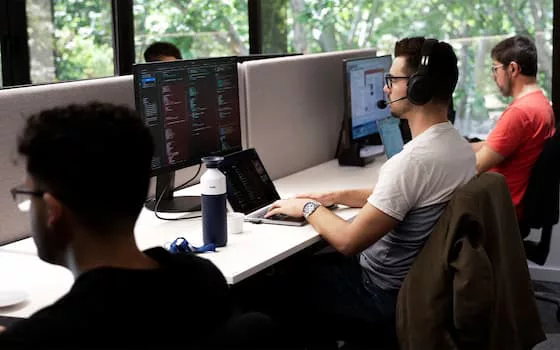
- Offices designed for focused work and collaboration;
- Meeting rooms and comfortable areas for deep work;
- A fully equipped kitchen with coffee, refreshments, snacks and fresh fruit.
These elements are not the reason people stay. They are the reason the work doesn’t feel unnecessarily difficult.
Fast IT support
When engineers repeatedly lose time to access issues, device problems, or tooling blockers, it becomes a quiet form of burnout.
Having IT support and an internal System Administrator available improves retention because problems are solved quickly and professionally. It also protects delivery performance by reducing blocked time.
HR that focuses on belonging closes a remote retention gap
This is one of the most underestimated parts of remote retention.
Dedicated teams working for a client can feel “in-between,” especially when they do not see the full team in person every day. Over time, that feeling reduces attachment. Once attachment drops, switching jobs becomes easier.
HR support that goes beyond administration helps prevent this by maintaining human connection and community:
- Supporting team gatherings and shared moments
- Ensuring people feel seen and included
- Creating practical touchpoints that strengthen belonging
- Noticing early signs of disengagement
This does not require forced culture. It requires consistent care and presence.
Delivery management that protects communication and catches risk early
In remote delivery, misalignment often starts as a small communication issue:
- Unclear expectations;
- Slow feedback cycles;
- Frustration building on one side without being voiced;
- A team member feeling unheard or misused.
A Delivery Manager acts as a stabilizing function between the client and the dedicated team, protecting satisfaction on both sides. This is important for retention because people often leave when they feel the relationship is unstable, not only when the work is hard.
Our Delivery Managers help with:
- Clear and smooth communication;
- Proactive check-ins with the client and team members;
- Early detection of dissatisfaction;
- Addressing issues early, while they’re still solvable.
This is how we prevent talent leakage: not with reaction, but with early signals and timely intervention.
The technical practices that keep remote teams stable
Support and belonging do not replace good technical delivery. They make it sustainable.
Retention improves when teams also have:
- Clear ownership boundaries (who owns which domains/services)
- Documented decision-making (short decision records prevent repeated debates)
- Stable standards (definition of done, review discipline, release readiness)
- Predictable rituals (planning with context, demos, retrospectives with follow-through)
In a client-owned team model, clients typically manage these technical elements, while the tech hub environment reduces operational friction and strengthens continuity.
Conclusion
Retention in remote delivery is not a perks problem, and it’s not solved by pushing harder on output. It improves when the team’s work environment is stable, support is responsive, and people feel they belong.
Our tech hub service strengthens retention because it combines client-owned delivery with operational and human support: facilities, equipment, IT and system administration, HR, and a Delivery Manager who detects issues early and protects satisfaction.
This combination matters because retention is rarely solved by a single policy. It is solved by a system that makes good work sustainable. When this system is in place, teams stay longer, learn the product deeply, keep standards consistent, and perform better over time.